The reliability of compressors, pumps, and turbines directly impacts national industrial output and energy security
John Crane highlights how advanced sealing technologies support reliability, efficiency, and India's industrial growth.
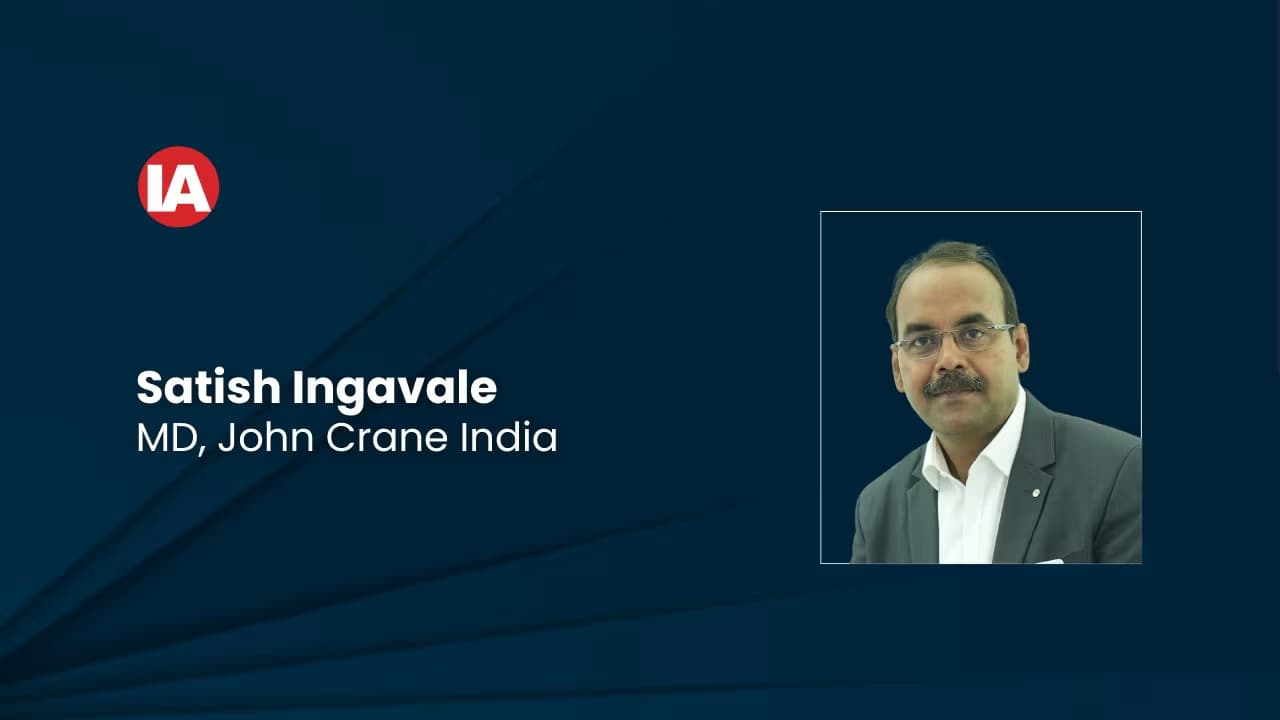
Satish Ingavale, Managing Director, John Crane India
With applications in critical compressors, pumps, and turbines, how are you positioning advanced sealing solutions not just as maintenance components, but as critical enablers of India’s 'Make in India' and industrial capacity growth?
At John Crane, we believe sealing solutions are no longer simply maintenance components, they are strategic enablers of industrial productivity, energy efficiency, and operational resilience. In sectors such as refining, LNG, petrochemicals, fertilisers, and power generation, the reliability of compressors, pumps, and turbines directly impacts national industrial output and energy security.
As India continues to invest heavily in manufacturing, refining capacity, LNG infrastructure, and industrial expansion under initiatives such as ‘Make in India’, operators increasingly need technologies that can improve uptime, reduce emissions, and support long-term asset reliability. Advanced dry gas seals, separation seals, couplings, filtration systems, and digital monitoring technologies all play an important role in helping facilities operate safely and efficiently at scale.
John Crane is supporting this growth not only through technology, but also through local engineering, manufacturing, servicing, and technical expertise in India. Our focus is on helping customers improve equipment reliability, reduce lifecycle costs, minimise energy losses, and increase operational efficiency, all of which are critical to supporting India’s industrial capacity ambitions.
Importantly, modern sealing technologies also contribute to sustainability goals by reducing fugitive emissions, lowering nitrogen consumption, and improving energy efficiency across critical rotating equipment.
Unplanned downtime in Indian refineries, LNG terminals, and power plants carries significant economic consequences. How do proactive service models, like John Crane’s Performance Plus, help prevent these critical failures?
Unplanned downtime is one of the largest operational and financial risks facing energy and process operators today. In critical sectors such as refining, LNG, petrochemicals, and power generation, even a short interruption can lead to substantial production losses, increased safety risks, and supply chain disruption.
Our approach is increasingly focused on predictive and proactive reliability rather than reactive maintenance. Through solutions such as Performance Plus™, John Crane works closely with customers to improve equipment performance, extend asset life, and reduce the likelihood of unexpected failures.
This includes advanced condition monitoring, reliability engineering, diagnostics, asset health assessments, seal performance optimisation, and lifecycle support. By combining engineering expertise with digital insights, operators can identify early warning signs before failures occur, enabling planned maintenance instead of emergency shutdowns.
In many facilities, this approach can significantly improve equipment availability and operational stability. It also helps customers optimise maintenance spend, reduce operational risk, and improve overall plant efficiency.
As energy infrastructure in India becomes larger and more complex, reliability is becoming a strategic business issue rather than simply a maintenance concern. That is where proactive service models deliver real value.
Fugitive gas losses and nitrogen overconsumption are often termed 'invisible efficiency problems.' Given India's commitment to reducing greenhouse gas emissions by 2030, what role do seal gas recovery systems play in converting these losses into efficiency gains?

Fugitive emissions and inefficient seal support systems are often hidden operational challenges, but they can have a significant environmental and economic impact over time.
In many rotating equipment applications, particularly compressors operating in oil and gas or LNG environments, excessive nitrogen consumption and process gas leakage can increase operating costs, reduce efficiency, and contribute to unnecessary emissions.
Technologies such as advanced separation seals and seal gas recovery systems help address these issues by reducing process gas leakage and optimising support gas consumption. For example, John Crane’s Type 93AX coaxial separation seal technology can reduce nitrogen consumption by up to 80% compared with conventional designs, while also helping prevent oil migration into the process gas side.
Seal gas recovery systems also allow operators to capture and reuse gases that would otherwise be vented or flared, turning what was previously a loss into a recoverable resource. This improves operational efficiency while helping facilities reduce emissions intensity.
As India continues to strengthen its environmental commitments and industrial sustainability targets, technologies that reduce fugitive emissions and improve energy efficiency will become increasingly important across refining, LNG, fertiliser, and power sectors.
As India rapidly expands its energy infrastructure, how is John Crane India transitioning from importing technology to building the ‘Make in India’ capabilities, particularly in developing high-performance seals tailored to local operating conditions?
India is an increasingly important strategic market for John Crane, not only as a growth market but also as an engineering and operational hub.
Our focus is on building stronger local capabilities across manufacturing, engineering support, aftermarket services, reliability expertise, and customer responsiveness. This aligns closely with India’s broader industrial and infrastructure ambitions.
Local operating conditions in India can often be highly demanding, whether due to climate, process variability, operating intensity, or infrastructure requirements. As a result, customers increasingly value solutions that are engineered and supported locally, with faster response times and a stronger understanding of operational realities.
John Crane India continues to invest in local talent, technical capability, and service infrastructure to support these requirements. Our objective is not simply to supply products into India, but to support customers throughout the full asset lifecycle through engineering collaboration, reliability services, digital monitoring, and local technical expertise.
We also see significant opportunity for India to play a larger role within John Crane’s global innovation and engineering ecosystem as energy transition projects continue to accelerate worldwide.
As India moves towards hydrogen, green ammonia, and carbon capture (CCUS) by 2030, how is John Crane adapting its sealing portfolio to meet the demanding technical challenges of these new energy pathways, such as handling highly permeable hydrogen?
The energy transition is creating a new generation of engineering challenges, particularly around reliability, containment, efficiency, and safety.
Hydrogen, for example, presents unique technical complexities because of its very small molecular size, high diffusivity, and permeability characteristics. Applications involving hydrogen, CCUS, and green ammonia often require advanced sealing technologies capable of operating reliably under demanding pressures, temperatures, and process conditions.
John Crane is actively developing and adapting sealing technologies to support these evolving applications. This includes dry gas seals, advanced containment systems, filtration technologies, and digital diagnostics designed to support low-emission and high-efficiency operations.
Globally, John Crane is already supporting more than 30 sustainable fuel and energy transition projects spanning hydrogen, CCUS, biofuels, and e-fuels. We are applying decades of experience in rotating equipment reliability to help customers manage the technical and operational challenges associated with these emerging energy pathways.
As India accelerates investment in hydrogen and low-carbon infrastructure, reliability and emissions control will be critical to ensuring these projects operate safely, efficiently, and economically at scale.
With the rise of condition-based monitoring, how are digital diagnostics and 'John Crane Sense' technologies reshaping predictive maintenance for your clients in the petrochemical and power sectors?
Digitalisation is fundamentally changing how industrial operators approach reliability and maintenance.
Traditionally, many maintenance activities were either reactive or based on fixed maintenance intervals. Today, operators increasingly want real-time visibility into equipment health so they can make faster, more informed operational decisions.
Technologies such as John Crane Sense® and John Crane SenseMonitor™ provide continuous monitoring and diagnostics for critical rotating equipment, helping customers identify potential issues before they escalate into major failures.
This enables a shift towards condition-based and predictive maintenance strategies, where interventions are driven by actual equipment performance rather than assumptions or fixed schedules.
In practical terms, this can help customers improve uptime, reduce unnecessary maintenance activity, optimise spare parts planning, and reduce operational risk. In one LNG application, John Crane Sense® Turbo provided operators with real-time insight into dry gas seal health and helped prevent an unplanned shutdown that could have resulted in several million dollars in production losses.
As petrochemical, LNG, and power facilities become increasingly automated and digitally connected, predictive reliability technologies will play an even larger role in improving operational performance and efficiency.
With India aiming to become a global leader in the energy transition while managing its traditional energy needs, what is your top priority for John Crane India over the next three to five years to ensure you remain the preferred partner for reliability and sustainability?
Our priority is to continue strengthening our position as a long-term reliability and sustainability partner for India’s energy and industrial sectors.
India is simultaneously expanding traditional energy infrastructure while accelerating investment in lower-carbon technologies, which creates both significant opportunity and increasing operational complexity for industry.
To support this transition, we are focused on three key areas: advancing reliability, improving operational efficiency, and supporting emissions reduction.
This means continuing to invest in advanced sealing technologies, digital diagnostics, local engineering expertise, aftermarket services, and customer collaboration. It also means helping customers reduce energy losses, improve equipment performance, minimise downtime, and lower emissions across both existing and emerging energy infrastructure.
We also believe localisation will become increasingly important. Customers want partners who can provide not only technology, but also responsive local support, engineering collaboration, and long-term operational expertise.
Ultimately, our goal is to help customers operate more safely, efficiently, and sustainably while supporting India’s long-term industrial growth and energy transition ambitions.
Satish Ingavale is the Managing Director of John Crane India, bringing over 30 years of experience in industrial engineering, sealing technologies, operations, sales, and service management. He leads the company's efforts in advancing reliability, sustainability, and energy-efficient solutions for the energy and process industries, helping customers improve operational performance while supporting decarbonisation and energy transition goals.