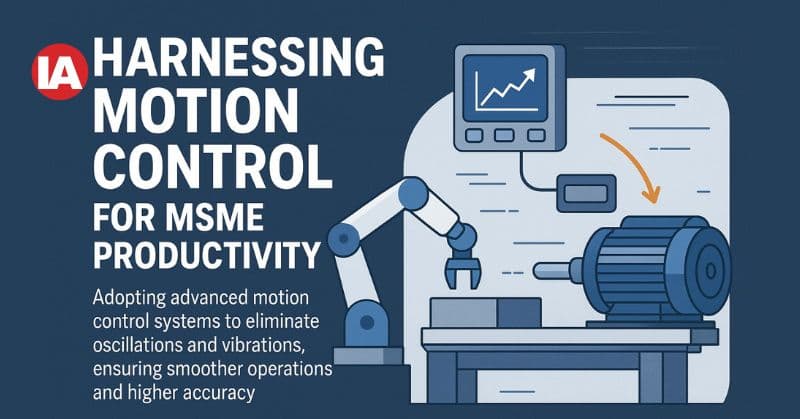
Darshana Thakkar elaborates how motion control technology is no longer the privilege of large manufacturers.
In today’s competitive manufacturing landscape, productivity and precision are the key differentiators for success – especially for Micro, Small, and Medium Enterprises (MSMEs). With increasing automation in production systems, one of the most effective technologies driving operational excellence is Motion Control Technology. By adopting advanced motion control systems, MSMEs can significantly enhance process stability, reduce unwanted oscillations and vibrations, and achieve consistent product quality – all while optimising energy consumption and machine life.
Motion control technology
Motion control refers to the use of servo drives, actuators, motors, and controllers to precisely control the movement and position of mechanical systems. Essentially, it’s the ‘nervous system’ of modern automation that governs how machines move – whether it’s the rotation of a robotic arm, the linear motion of a conveyor, or the synchronised movement of multi-axis machines.
Core components of the motion control system:
1. Controller: The brain of the system that commands position, speed, and torque based on input signals.
2. Drive (Amplifier): The intermediary that translates low-power control signals into high-power signals for the motor.
3. Motor (Servo or Stepper): The actuator that converts electrical energy into mechanical movement.
By integrating sensors and feedback loops, motion control systems ensure precise, repeatable, and smooth movements even in dynamic industrial environments.
The challenge: Oscillation & vibration in machinery of the MSME industry
Most MSMEs rely on conventional machines or semi-automated setups where vibration and oscillation are common challenges. These vibrations – caused by mechanical imbalances, misalignment, or inconsistent load – can lead to:
• Reduced machining accuracy
• Increased tool wear
• Noise and energy loss
• Premature equipment failure, and
• Compromised product quality.
Even minor oscillations can impact precision in CNC machines, packaging systems, printing machines, or robotics applications. Over time, this affects the bottom line due to rework, downtime, and inefficiencies.
How motion control eliminates oscillation and improves productivity
Motion control systems use real-time feedback loops and advanced servo algorithms to correct unwanted motion dynamically. The servo drive continuously monitors actual versus commanded position and speed, making microsecond-level adjustments to eliminate deviation.
Here’s how it helps:
1. Precision Positioning: Advanced servo systems ensure that movement is smooth and accurate, even at high speeds, preventing jerk and oscillation.
2. Dynamic Load Compensation: Real-time torque and speed control help machines adjust automatically to varying loads, minimising vibration.
3. Resonance Suppression: Modern drives incorporate vibration suppression algorithms that actively dampen mechanical resonance in the system.
4. Smooth Start-Stop Motion: By controlling acceleration and deceleration profiles, the system prevents sudden jerks that typically cause vibration.
5. Improved Product Quality: Stable motion leads to uniform processing, resulting in higher-quality outputs with fewer rejects.
Benefits of motion control technology for MSMEs
1. Enhanced Precision and Quality: Repeatability and accuracy improve drastically, ensuring consistent performance even under varying conditions.
2. Reduced Downtime: Predictive monitoring and smoother operations lead to fewer breakdowns and maintenance interruptions.
3. Energy Efficiency: Optimised drive systems reduce unnecessary power loss by regulating torque and speed effectively.
4. Scalability: Modular architectures allow MSMEs to start small and expand automation progressively.
5. Flexibility in Production: Easily adaptable to multiple product variants or configurations.
6. Higher RoI: The investment pays off through increased throughput, reduced wastage, and improved reliability.
Top global and Indian companies offering motion control solutions
Several leading technology providers offer motion control solutions suitable for MSMEs and large enterprises alike. Some of the globally recognised names include:
• Siemens – Offers the SIMOTION and SINAMICS series for multi-axis motion systems.
• Rockwell Automation (Allen-Bradley) – Known for integrated control and motion systems with high reliability.
• Mitsubishi Electric – Provides compact, high-performance servo and motion controllers ideal for SMEs.
• Yaskawa Electric – A pioneer in servo motors and drives, offering robust solutions for industrial automation.
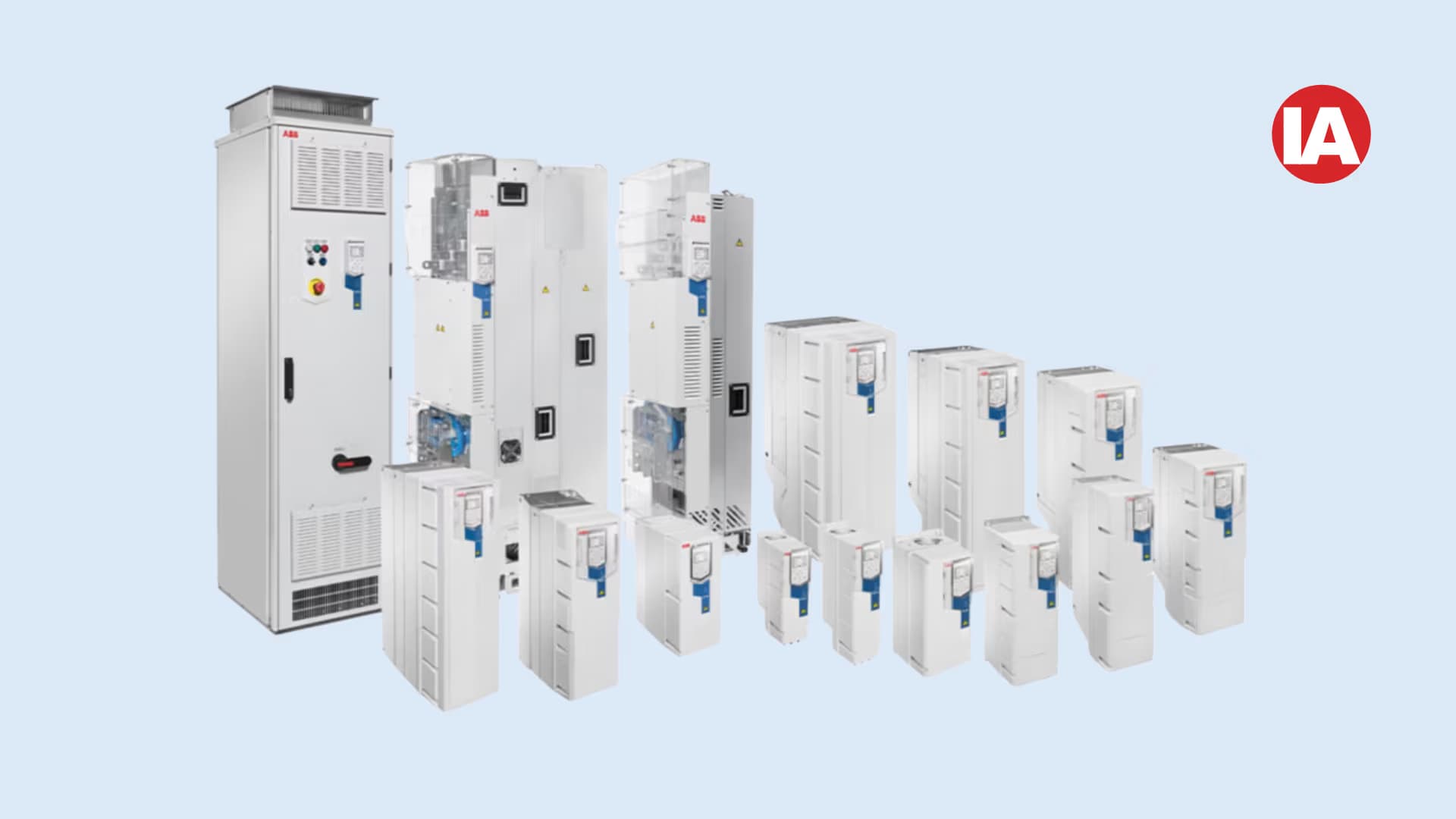
• ABB – Delivers integrated motion and robotics solutions with advanced vibration control features.
• Schneider Electric – Provides modular motion systems compatible with IoT-enabled control platforms.
• Delta Electronics and Panasonic – Popular in cost-sensitive MSME segments for reliable, scalable servo systems.
• Bosch Rexroth – Known for open and modular motion platforms with advanced control functionalities.
In India, companies like B&R Automation (ABB Group), Fuji Electric, and L&T Electrical & Automation are also making motion control technology more accessible and affordable for SMEs.
Selecting the right motion control system for MSMEs
Choosing the right motion control system is critical for achieving the intended performance gains. MSMEs should consider the following factors before finalising a solution:
1. Application Requirement:
Identify whether the need is for positioning, velocity control, or torque control. A packaging machine’s needs differ from a CNC milling or textile application.
2. Open and Modular Architecture:
Opt for systems that can integrate easily with existing PLCs, robots, and software platforms. Open architecture ensures flexibility for future upgrades without vendor lock-in.
3. Scalability and Future Readiness:
A scalable system allows incremental expansion – additional axes, higher precision, or IoT connectivity – as the business grows.
4. Ease of Integration:
Look for motion systems compatible with common industrial communication protocols (EtherCAT, PROFINET, Modbus, etc.), for seamless automation integration.
5. Servo Drive Features:
A suitable servo drive should offer high response speed, vibration suppression, auto-tuning, and energy regeneration capability. Ensure it matches motor ratings and load requirements precisely.
6. After-Sales Support and Training:
For MSMEs, reliable local service and training support are crucial. Choose brands with strong regional presence and technical support teams.
7. Total Cost of Ownership (TCO):
Beyond initial cost, evaluate lifecycle cost including maintenance, energy usage, and upgrade potential. An energy-efficient system often recovers its cost faster.
Building for tomorrow: Motion control in Industry 4.0
As the industry transitions towards Industry 4.0 and smart manufacturing, motion control systems are evolving into intelligent motion platforms. Integration with sensors, AI, and IoT allows data-driven optimisation of movement, predictive maintenance, and remote monitoring. MSMEs adopting open and modular motion systems today are laying a strong foundation for tomorrow’s digital transformation.
The future-ready MSME will not just automate for efficiency – but will connect, analyse, and optimise every motion to achieve precision-driven productivity.
Conclusion
Motion control technology is no longer the privilege of large manufacturers – it’s an essential enabler for MSMEs aiming to compete on quality, efficiency, and flexibility. By adopting servo-based motion systems that reduce unwanted oscillations and vibrations, small and medium enterprises can unlock higher productivity, improved quality, and sustainable growth.
The journey toward advanced automation begins with a single, well-informed step – choosing the right motion control solution that is open, modular, and scalable for the future. For MSMEs, embracing this technology is not just about movement control; it’s about moving toward excellence and competitiveness in a rapidly evolving industrial world.
Darshana Thakkar is an MSME Transformation specialist and Founder of Transformation – The Strategy HUB. With an Electrical engineering and MBA in business operations background, she has 28 years of hardcore industrial experience in transforming Small businesses. She helps MSMEs define growth paths, derive marketing strategies, improve business operations, adopt digital Transformation, and increase profitability.Darshana Thakkar is an author, speaker, and TV panelist. Her achievements, journey, and interviews have been featured in several newspapers, Premium business magazines, and TV.
She has won several regional, national, and international awards and is famous as an MSME activist and women's business leader. Her consulting venture, Transformation, was listed among the most trusted consulting companies in 2022 and among the top 50 consulting companies for MSME in 2023. She holds a few honorary positions in industry associations.
Major achievements:
· Winner of Global Women Leader -2023 by Global Women Leadership Award
· MSME Honor award-2022 -Champion of Cause by Tally Solutions
· Winner of Gujarat Women's Leader Award – 2021
She is associated with a few other premier institutes as
· Certified Women Director & Independent Director by IICA, MCA, GoI.
· Member of the Board of Management at Makarpura GIDC Industrial Estate Cooperative Bank Ltd.
· National President: WICCI-Entrepreneurship Development Council
· Trainer, Startup mentor, & Jury member at CED, Government of Gujarat.
https://www.linkedin.com/in/darshanamthakkar/
Author