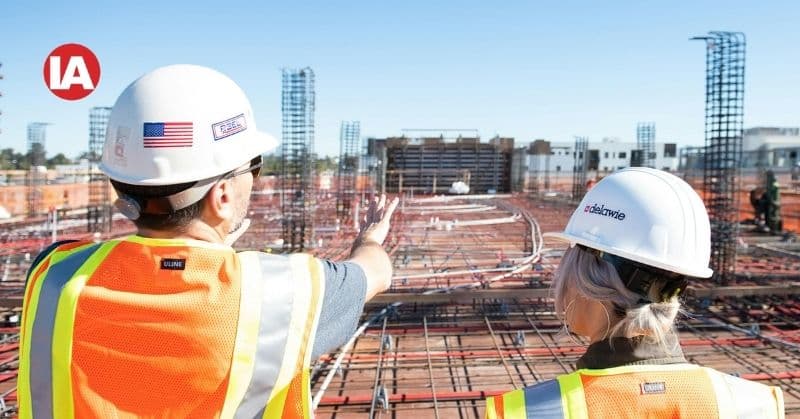
AI-driven technology is no longer a futuristic concept; it is a vital tool for mitigating safety risks on construction sites, says Kamarajan M, Head of Education at the British Safety Council – India.
Safety in the construction sector remains one of India’s most critical challenges. A recent ILO (International Labour Organization) study highlighted that India faces the highest number of fatal accidents on construction sites worldwide. Traditional safety measures are often insufficient in today’s complex environments. To protect workers, the industry must evolve by integrating cutting-edge machine learning, deep learning, and real-time monitoring.
Why Construction Safety Remains a Challenge in India
While site safety is a global issue, it is particularly acute in India due to increasing project complexity and resource constraints. Workers face daily hazards, including:
Working at extreme heights.
Handling heavy machinery.
Navigating high-traffic zones.
Traditional safety management relies on manual procedures, which are time-consuming and prone to human error. With a massive workforce to oversee, supervisors often struggle with real-time safety tracking, leading to delays in addressing potential hazards.
The Role of AI in Improving Workplace Safety
The transformative potential of AI in construction is vast. By using AI for site monitoring, companies can improve safety, reduce costs, and streamline workflows. Key benefits include:
Real-time Hazard Detection: AI systems identify risks and issue instant alerts to workers and managers.
Predictive Analytics: By analyzing historical data, AI helps managers identify which processes are most prone to injury, allowing for proactive adjustments.
Interactive Safety Training: Using Virtual Reality (VR) and Augmented Reality (AR), employers can provide immersive simulations. This allows workers to rehearse responses to dangerous situations without actual exposure to risk.
AI-Driven Wearable Technology: The Future of Protection
In the UK and US, wearable technology is already redefining health and safety. While still in its nascent stages in India, devices like the Modjoul Smart Belt and WearHealth exoskeleton scanning technology are gaining traction.
Smart Helmets and Sensors
Equipping workers with smart helmets allows for the monitoring of heart rate and body temperature, detecting early signs of heat stress or fatigue. Additionally, GPS technology ensures workers stay within safe zones and prevents unauthorized access to high-risk areas.
Height Safety Monitoring
AI wearables can now detect if a worker has properly hooked their safety harness lanyard. If a worker is on a scaffold without being secured, the system sends an immediate alert to the supervisor.
Harnessing the Power of IoT and Sensors
The Internet of Things (IoT) plays a pivotal role in creating a "connected" job site.
Machine Sensors: Monitor load weights in warehouses to prevent rack collapses.
Vehicle Analytics: Track driver behavior to promote safer habits.
Fire Safety: IoT sensors detect temperature spikes and gas leaks at the incipient stage, triggering suppression systems before a fire spreads.
Empowering HSE Managers with Data
AI acts as a force multiplier for Health, Safety, and Environment (HSE) managers. Imagine a scenario where a manager arrives at a site and receives an instant status report on their dashboard:
Risk Mapping: AI identifies specific locations where HIRA (Hazard Identification and Risk Assessment) measures are missing.
Permit Management: AI analyzes visual feeds to help managers decide whether to authorize or reject work permits based on real-time compliance.
Targeted Training: Based on unsafe observations, AI can recommend specific training programs for individual engineers or workers via a Learning Management System.
Conclusion
In today’s fast-paced industry, AI-driven technology is the most effective way to mitigate safety risks. By embracing machine learning, IoT sensors, and predictive analytics, construction companies can move from a reactive to a proactive safety culture—paving the way for a safer, more efficient future for the Indian workforce.
Discover more automation news, articles, and insights — subscribe today.
Follow us on LinkedIn for continuous updates.
Author