Why the Next Global Industrial Software Giant is Likely to Emerge from India
India is currently the world’s fifth-largest economy, with a GDP exceeding $3.7 trillion. To ascend to the third-largest position within this decade, the manufacturing sector must undergo a radical transformation—increasing its GDP contribution from 17% to 25%.
According to Anil Agrawal, Founder and CEO of CIMCON Automation, this vision of Atmanirbhar Bharat (Self-reliant India) rests on two pillars: expanding existing capacity and developing entirely new technological competencies.
Defining the "Smart" in Manufacturing
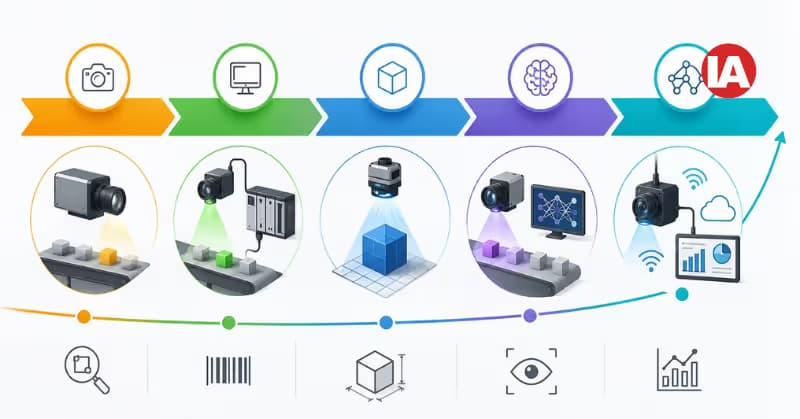
Smart manufacturing is not just a buzzword; it is a system’s ability to evolve. Agrawal breaks down the "smart" hierarchy into three distinct functional capabilities:
1. Sense: The ability to detect physical variables. This involves sensors for temperature, vibration, sound, and pressure.
2. Respond: The physical reaction to sensed data. This is powered by automation and control systems like PLCs and SCADA.
3. Think & Improve: The peak of the hierarchy. This uses Artificial Intelligence (AI) to optimize energy efficiency and predict failures before they happen.
While most modern machines can already "Sense" and "Respond," the integration of Industrial AI is what allows a factory to "Think"—taking a full view of the factory to understand upstream and downstream processes.

India’s "Unfair Advantage" in Industrial AI
Agrawal predicts the next "Microsoft of the industrial world" will likely come from India. This bold claim is supported by three strategic advantages:
Engineering Depth: An enormous pool of engineers with deep manufacturing expertise.
AI Talent Pool: Nearly half a million AI software professionals who have already supported global product development.
The Data Advantage: India holds a significant edge in access to manufacturing data. Flexible rules around data use allow for the robust training and enhancement of industrial AI algorithms.
Why Smart Manufacturing is a Necessity, Not a Luxury
As India competes globally, quality and reliability are the new barriers to entry. Furthermore, India is constrained by energy availability and cost, forcing industries to become highly energy efficient.
Smart manufacturing provides the solution to these pressures by:
Competing at a global level with superior quality and reliability.
Ensuring strict adherence to delivery schedules through predictive planning.
Driving measurable sustainability outcomes through intelligent infrastructure.
About Anil Agrawal & CIMCON Automation
Anil Agrawal is a driving force behind India's automation evolution. After specializing in advanced industrial automation at the University of Maryland, he returned to India in 1988 to establish CIMCON.
His leadership has transformed conventional utility infrastructure into "self-aware" networks. Key achievements include:
Introducing India’s first SMS-based water SCADA system.
Securing mission-critical projects for ISRO and DRDL.
Impacting 49 million residents through clean water access and 12 million farmers through intelligent infrastructure.
FAQ.
What is the manufacturing GDP target for India?
The goal is to increase manufacturing’s contribution to India's GDP from 17% to 25% to reach the status of the world’s third-largest economy.
Why is data considered India's "unfair advantage"?
India has a vast amount of manufacturing data and currently maintains flexible rules for its use, which is critical for training the next generation of Industrial AI algorithms.
How does Smart Manufacturing help with sustainability?
By using AI to "think and improve," systems can optimize energy consumption and reduce waste, helping industries remain profitable despite high energy costs.
Author