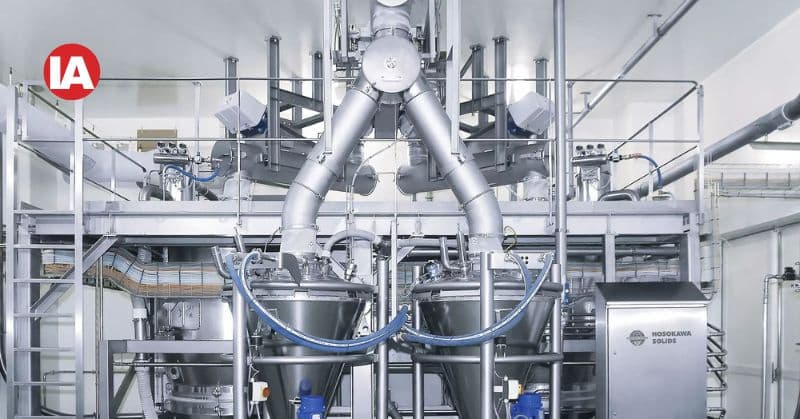
Modern pneumatic conveying systems embody the principles of smart manufacturing: they are efficient, clean, reliable, and connected, says Benedicta Chettiar.
Pneumatic conveying systems have long been a backbone of bulk material handling across industries – from food processing and pharmaceuticals to cement, chemicals, and power generation. These systems use air or gas streams to transport powders, granules, or pellets through enclosed pipelines. What was once a simple alternative to mechanical conveyors has evolved into a sophisticated, automated, and highly efficient material handling solution.
Evolution of pneumatic conveying
Traditionally, pneumatic conveying was chosen for its cleanliness, flexibility, and ability to handle materials without exposing them to the environment. Over time, technological advancements have refined these systems, improving efficiency, reducing energy consumption, and enabling better control. Today’s systems are equipped with intelligent sensors, variable speed drives, and advanced control algorithms, transforming them into critical components of smart factories.
Two primary methods – dilute phase and dense phase conveying – still dominate. Dilute phase systems use high-velocity air to suspend and carry particles, suitable for low to medium-density materials. Dense phase systems use lower velocities and higher pressures, pushing material in a plug flow, ideal for fragile or abrasive materials. Modern designs often blend these principles to balance throughput, energy use, and material integrity.
Integration with automation and Industry 4.0
One of the biggest shifts in recent years has been the integration of pneumatic conveying with plant automation systems. Real-time monitoring using IoT-enabled sensors allows operators to track flow rates, pressure drops, and blockages instantly. Predictive maintenance powered by AI algorithms helps anticipate issues before they disrupt production. This reduces unplanned downtime and extends equipment life.
Advanced PLCs and SCADA systems now control conveying lines, automatically adjusting airflows and feed rates based on demand. This smart control minimises material wastage, improves consistency, and optimises energy use – a critical factor in energy-intensive industries.
Focus on energy efficiency and sustainability
Energy consumption has always been a key consideration in pneumatic conveying. Modern systems use energy-optimised blowers, variable frequency drives (VFDs), and intelligent air management to cut power usage significantly. Some installations integrate regenerative blowers or compressed air recovery systems, further enhancing efficiency.
In addition, closed-loop systems help minimise dust emissions, ensuring compliance with increasingly stringent environmental regulations. Cleaner conveying also improves workplace safety and reduces the need for extensive filtration and housekeeping.
Material handling flexibility
Modern pneumatic conveying systems can handle an impressive variety of materials – from fragile food ingredients and pharmaceutical powders to abrasive minerals and chemicals. System designers now use advanced simulation tools to model air-material interactions, optimising pipeline layouts and velocities to suit each application. Modular designs allow easy expansion or reconfiguration, making these systems adaptable to changing production needs.
Conclusion
Modern pneumatic conveying systems embody the principles of smart manufacturing: they are efficient, clean, reliable, and connected. By integrating automation, optimising energy use, and improving material handling flexibility, these systems are not just conveyors – they are enablers of productivity and sustainability. As industries continue to embrace digital transformation, pneumatic conveying technology will remain a vital element in building smarter, safer, and more sustainable plants.
Visit for more insights: https://www.industrialautomationindia.in/
Benedicta Chettiar is Editor & Publisher of Industrial Automation; and Manager, Strategic Developments, at IED Communications. Besides these roles, Beni, as she is known, is also actively managing the affairs of Jyothi Process, a state-of-the-art printing press.
Author