In 2025, motion control and drives are no longer simply components that make machines move – they are the intelligent backbone of modern automation, says Sumit Goyal.
As factories and production lines become smarter and more connected, motion control and drives are stepping out of the shadows of traditional automation. They are no longer just technical tools helping machines move; they are now the intelligence behind smarter, faster, and greener industrial operations. In 2025, these technologies are changing how industries work, blending precision with adaptability and focusing on sustainability as much as performance.
Moving beyond precision: Intelligent systems that think for themselves
For years, motion control systems were admired for their ability to move machines with pinpoint accuracy and consistent speed. Today, however, their role extends far beyond executing predefined commands. The convergence of artificial intelligence, edge computing, and the Industrial Internet of Things (IIoT) has transformed these systems into intelligent decision-making engines.
Assembly lines have been overhauled by integrating smart drives equipped with predictive maintenance capabilities. Instead of responding to failures after they occur, these systems continuously monitor motor currents, vibration patterns, and temperature data, learning from operational data to anticipate maintenance needs. This approach significantly reduces unexpected downtime, improves throughput, and lowers energy consumption – shifting operations from reactive to proactive strategies that enable factories to operate closer to optimal capacity.

Smarter drives: Adapting in real time and saving energy
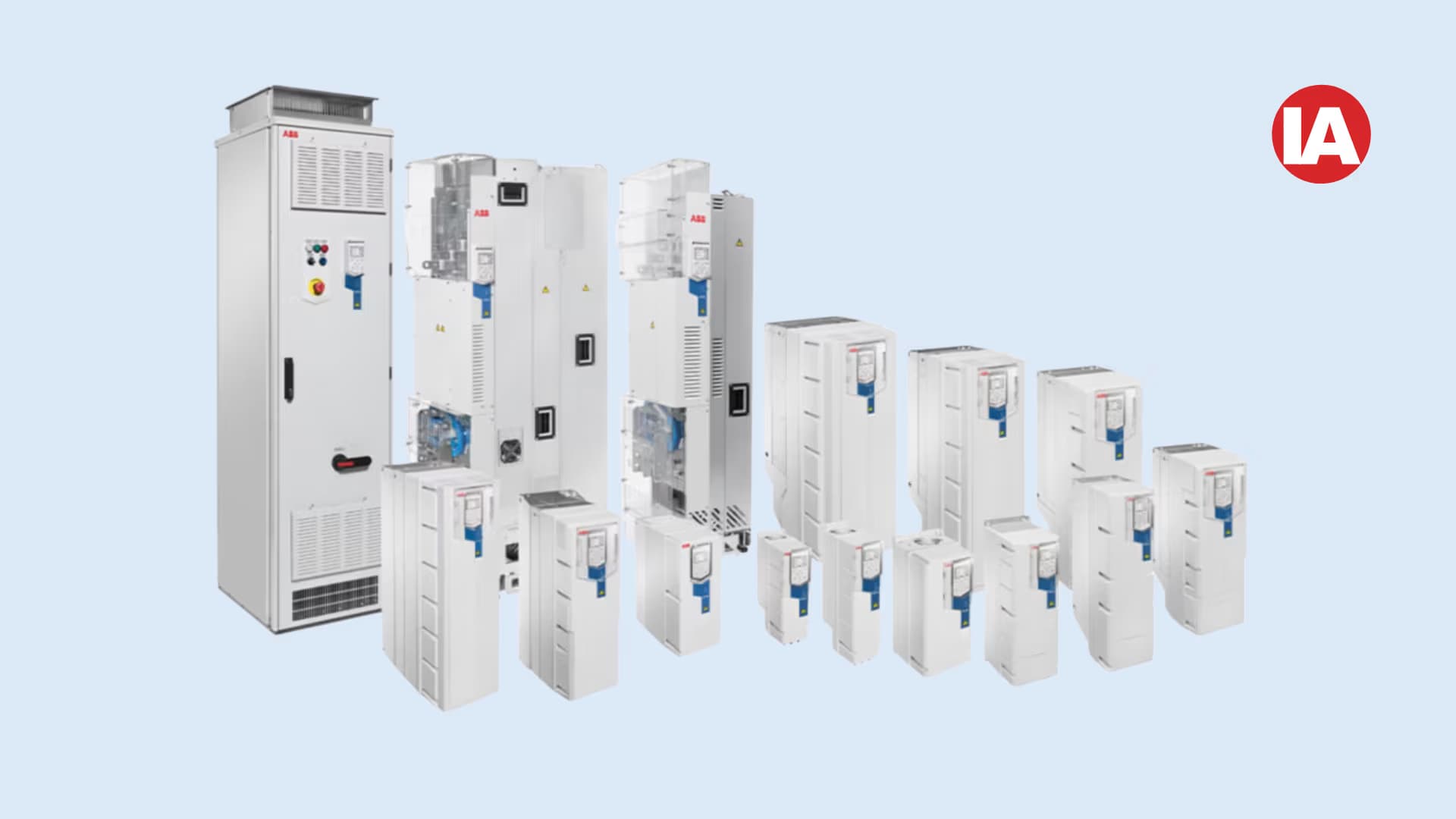
Drives no longer merely regulate motor speed and torque. Modern intelligent drives embed advanced processors that analyse real-time data, automatically adjust performance parameters, and communicate directly with supervisory control systems. This allows for adaptive speed control, automatic load balancing, and energy recuperation, all working seamlessly.
In highly regulated environments where precision and compliance are paramount, the adoption of regenerative servo drives has made a significant impact. Facilities have reported up to 15% energy savings by deploying drives capable of capturing kinetic energy during deceleration and feeding it back into the system. These drives also enable dynamic production speed adjustments based on real-time demand, improving throughput while maintaining stringent quality standards.
Moreover, the rise of software-defined automation (SDA) enables manufacturers to remotely configure, monitor, and optimise their motion control systems without extensive hardware modifications. This greatly reduces time-to-market and enhances operational flexibility.
Edge computing & IIoT: Real-time, localised intelligence
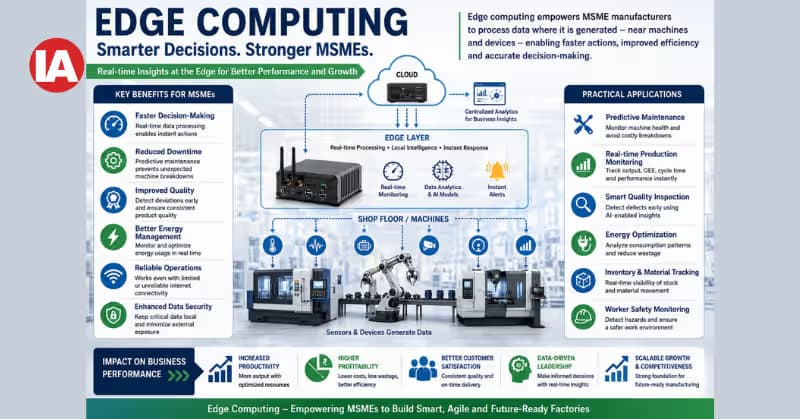
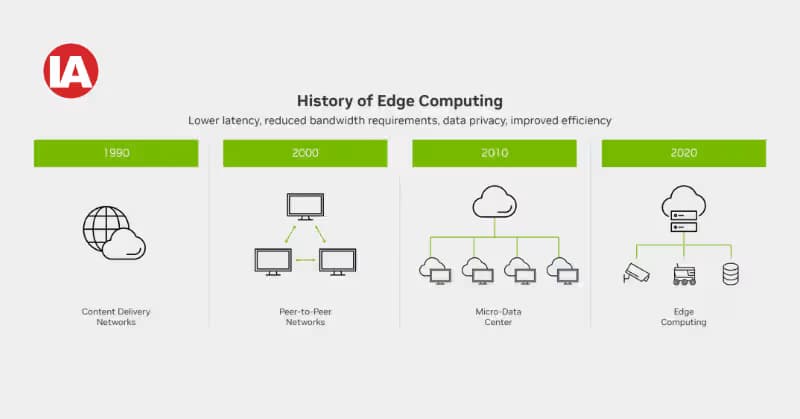
Edge computing has emerged as a critical component of motion control, particularly for applications where milliseconds make a difference. By processing information locally, near the machine, edge devices reduce latency, enhance reliability, and minimise data transmission costs. This enables motion control systems to respond instantly to changing conditions, which is essential in ultra-precise applications.
For example, handling ultra-delicate materials now relies on edge-based motion control to manage micron-level positioning accuracy. Instead of depending on centralised cloud servers, the system continuously analyses sensor data locally, making subtle adjustments in real time to correct for the smallest misalignment or vibration. The result is less material waste, fewer defects, and smoother production flow.
The IIoT further strengthens this ecosystem by seamlessly linking sensors, drives, controllers, and edge computing devices. This network facilitates continuous data exchange, leading to smarter decision-making, faster responses to production anomalies, and a reduced need for manual oversight.
Collaborative robotics: Redefining human-machine interaction
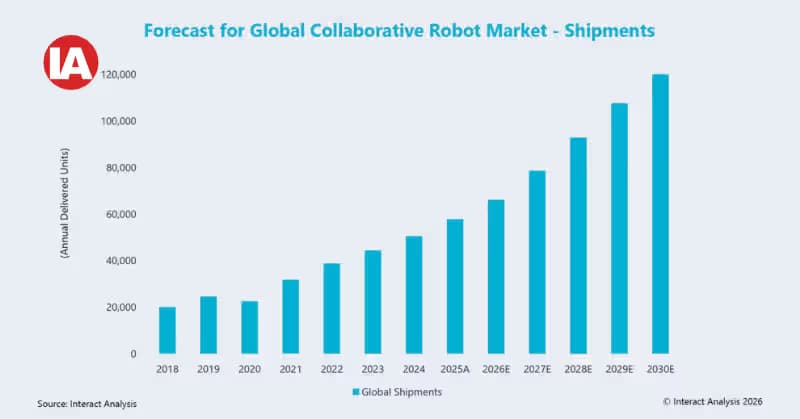
Collaborative robots, or cobots, have transformed the factory floor into a space where humans and machines work side by side. Unlike traditional industrial robots that operated within rigid safety barriers, cobots depend on advanced motion control systems that dynamically adjust movements based on human presence and actions.
In assembly environments, cobots now calculate safe trajectories in real time, slowing down or altering movements when a human operator is nearby. This approach not only improves workplace safety but also increases production flexibility, enabling teams to switch tasks quickly without time-consuming reprogramming.
Next-generation connectivity: 5G and time-sensitive networking (TSN)
The adoption of 5G and Time-Sensitive Networking (TSN) is transforming motion control by providing ultra-low latency and deterministic communication. These advancements are
essential for high-speed, precision-critical applications such as autonomous guided vehicles (AGVs), high-speed pick-and-place machines, and remote-controlled operations.
Manufacturing environments with hundreds of drives and sensors now benefit from TSN-enabled networks, which synchronise motion control actions with sub-millisecond precision. This capability enables reduced packaging errors, higher throughput, and real-time reconfiguration of production lines to accommodate different product variants, all while maintaining system reliability.
Sustainability: A strategic imperative
Sustainability has become a core principle in motion control system design. Companies are increasingly focused on reducing energy consumption, minimising material waste, and extending equipment lifespan. Energy-efficient motors and drives with active energy recuperation are rapidly replacing older, less efficient models.
Industries have adopted drives that capture, and reuse energy generated during braking operations, resulting in 10-15% energy cost reductions and contributing to a lower carbon footprint. Additionally, digital twins – virtual representations of physical systems – enable engineers to simulate energy consumption and system behaviour in advance, helping to optimise performance before hardware is installed.
Conclusion: Motion control as the pulse of industrial progress
In 2025, motion control and drives are no longer simply components that make machines move – they are the intelligent backbone of modern automation. Industry leaders are leveraging these systems to go beyond speed and precision, transforming factories into adaptive, sustainable, and predictive environments.
The next wave of industrial automation will be defined by systems that can sense, learn, and act autonomously, turning static production lines into dynamic ecosystems that improve continuously. Organisations embracing this evolution will not only enhance operational efficiency but also position themselves as leaders in a rapidly transforming industrial landscape.
Sumit Goyal is Consulting Analyst – Industrial Growth Advisory, at Frost & Sullivan. Sumit is a Mechanical Engineering graduate from Ahmedabad and has completed PGPM from ICFAI Business School with a major in Marketing and minor in Operations. He has a keen interest in Statistics and Data Science, and was earlier a Strategy Consultant at NEC Corporation.
https://www.linkedin.com/in/sumit-goyal-51b170171/
Author