How AI and Machine Learning are Transforming Global Supply Chain Risk Management
Modern supply chains operate within highly interconnected global networks, making them increasingly complex and interdependent. While this interconnectedness improves efficiency and market reach, it also exposes organizations to a broader range of supply risks. According to Arjit Agarwal, a strategy and transformation leader, predictive procurement and supply risk forecasting are no longer optional—they are critical enablers of value-driven procurement.
Disruptions can arise from natural disasters, geopolitical instability, sudden demand fluctuations, or supplier financial distress. Any of these events can significantly interrupt the flow of materials and services across a network. Consequently, managing supply risk has evolved into a top-tier strategic priority.

From Reactive to Proactive: Navigating the VUCA Environment
Traditional supply chain risk management approaches have largely been reactive, relying on historical data and post-disruption analysis. However, such methods are increasingly inadequate in today’s VUCA (Volatile, Uncertain, Complex, and Ambiguity) business environment.
To remain competitive, organizations must move toward proactive risk management practices.
The Power of Predictive Procurement
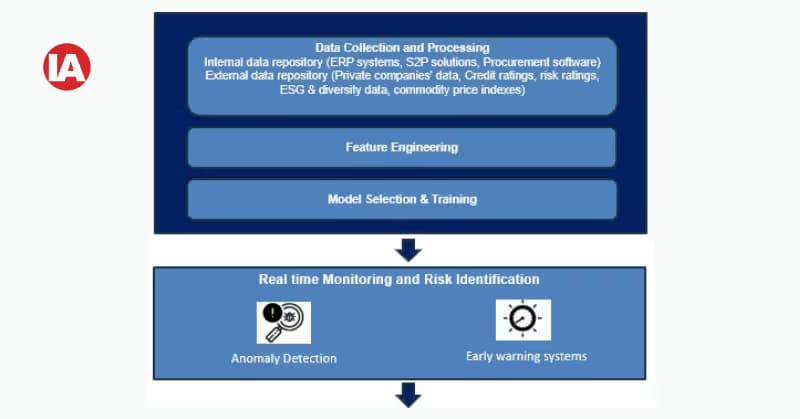
Predictive procurement represents the next major shift in the industry. By integrating predictive analytics and machine learning, organizations can analyze massive volumes of real-time data to anticipate potential disruptions before they materialize.
Predictive Analytics: Uses statistical models to estimate the likelihood of future events.
Machine Learning: Enhances these models by identifying hidden patterns, relationships, and anomalies that traditional manual methods often overlook.

Key Drivers Accelerating Predictive Procurement Adoption
Organizations are rapidly adopting these technologies due to several critical factors:
1. Heightened Supply Chain Volatility
Global networks are exposed to frequent disruptions ranging from climate-related events to logistics bottlenecks. Traditional approaches fail to catch the early warning signals that predictive tools are designed to find.
2. Growing Complexity of Multi-Tier Networks
Most organizations lack transparency beyond their Tier-1 suppliers. Predictive procurement enables visibility across deeper supplier tiers, identifying single-source vulnerabilities before they cause cascading failures.
3. The Rise of Real-Time Data Visibility
The integration of ERP systems, IoT-enabled tracking, and cloud platforms has created a wealth of data. Advanced AI transforms this raw information into actionable risk insights.
4. Shift Toward Resilience Over Cost
Procurement is no longer judged solely on cost savings. Organizations are now prioritizing continuity of supply and risk-adjusted value creation.

Conclusion: Building Future-Ready Supply Chains
In a world of constant disruption, the ability to anticipate demand fluctuations and identify supplier risks across multiple tiers is the hallmark of a resilient business. By leveraging machine learning and real-time data, procurement teams can move away from reactive, cost-focused decision-making toward a balanced approach that ensures long-term stability and compliance.
Arjit Agarwal is a Principal Consultant in Business Consulting at Nexdigm. With over 11 years of experience across healthcare, energy, and FMCG sectors, Arjit is a recognized leader in procurement-led value creation and digital transformation. He works closely with CXO leadership to design future-ready supply chain capabilities.
FAQ.
What is predictive procurement?
Predictive procurement is an AI-driven approach that uses historical and real-time data to forecast future supply chain events, pricing trends, and potential risks, allowing teams to take action before a disruption occurs.
How does a VUCA environment impact supply chain risk management?
A VUCA (Volatile, Uncertain, Complex, and Ambiguous) environment makes traditional forecasting models obsolete. It requires organizations to use more agile, data-driven tools to handle rapid market shifts and geopolitical instability.
Why is machine learning important for supply risk forecasting?
Machine learning can process complex datasets to find "hidden" anomalies or correlations—such as a specific weather pattern in one region affecting a Tier-3 supplier’s output—that a human analyst would likely miss.
What are the main benefits of moving from reactive to proactive risk management?
The primary benefits include reduced operational downtime, better financial protection against supplier distress, and the ability to maintain supply continuity during global crises.
Author