Digital tools, analytics, and automation are now foundational to Renewable Energy performance
Explore how digital tools, analytics, and automation are transforming renewable energy performance, driving efficiency, reliability, and smarter asset management.
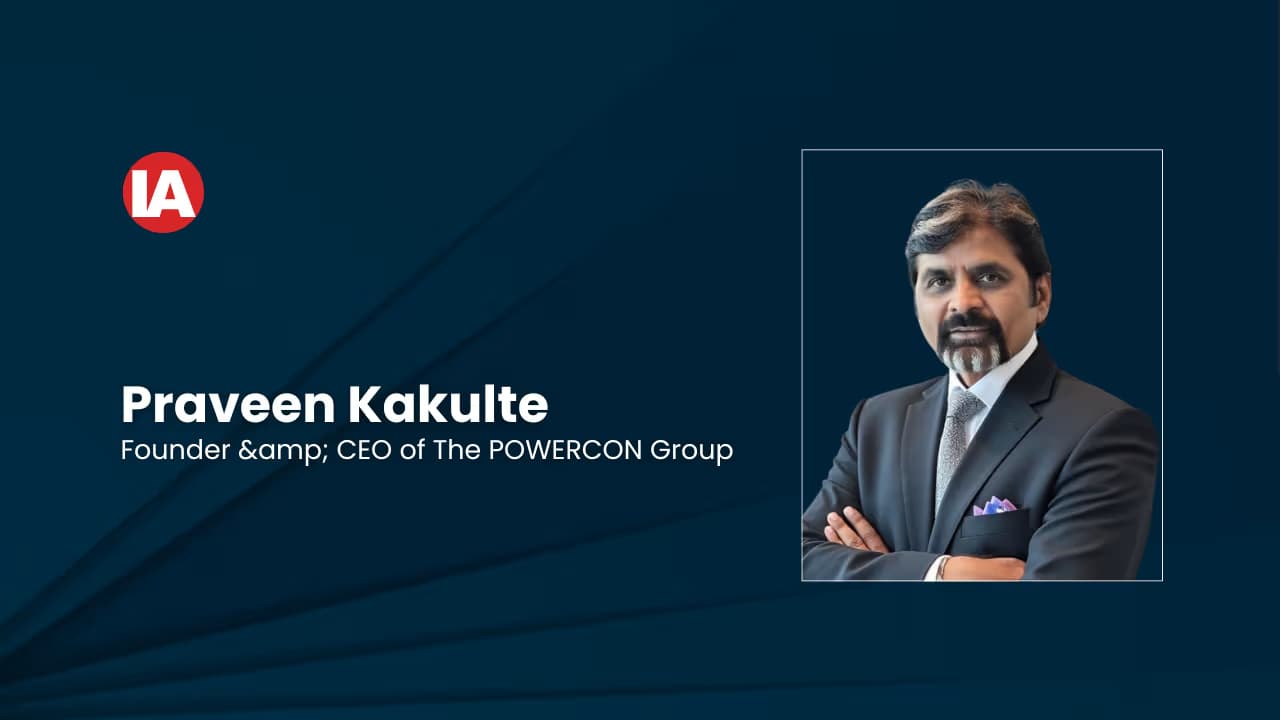
Praveen Kakulte, Founder & CEO of The POWERCON Group.
How do you see India’s Renewable Energy sector evolving over the next five years, and what key trends will define this growth?
Over the next five years, India’s Renewable Energy (RE) sector will move from aggressive capacity addition to a phase defined by integration, optimisation, and performance-led growth.
Capacity expansion will continue at scale, but greater attention will shift toward grid stability, quality of generation, predictable long-term performance, energy management, and sustainability across the project lifecycle. Hybrid projects combining solar, wind, and storage will become increasingly mainstream, supported by improved forecasting, stronger evacuation infrastructure, and deeper participation in power trading markets. As merchant capacity rises, real-time trading, short-term contracts, and market-linked dispatch mechanisms will play a larger role in revenue optimisation.
The industry will also see stronger emphasis on safety standards, workforce capability, ESG compliance, and digitalisation. Investor scrutiny is increasing, and future growth will be measured not only in megawatts added but in operational excellence, asset reliability, and long-term sustainability performance.
Nonetheless, towards energy security and for meeting high energy demands, the RE will necessitate supplementation with nuclear and a bit of fossils.
The Energy Studio in Pune is a unique concept. How is centralised, technology-driven asset management changing the way renewable assets are monitored and optimised globally?
Centralised, technology-driven asset management has fundamentally reshaped renewable portfolio operations. The industry has moved from reactive, site-dependent management to proactive data-led performance control across geographies. Our Energy Studio in Pune reflects this revolution. It consolidates live data from thousands of assets into a unified command & control centre, providing real-time visibility into generation, availability, losses, and risk indicators. This enables faster fault detection, predictive interventions, and strategic operating responses.
For Asset Owners, this translates into reduced downtime, improved yields, lower operating costs, predictable performance, energy management, and stronger governance by ‘Controlling the Uncontrollable’ resources. It also enables consistent safety oversight and portfolio benchmarking at a larger scale.
‘Power Trading’ is yet another important offering of the Energy Studio. It provides the analytical and operational intelligence to maximise energy offtake. Real-time analysis of plant generation and market prices helps in achieving maximum revenue and avoiding penalties.
Anticipating resource availability and superimposing asset availability thereof, the Energy Studio predicts reasonably accurate power production ahead of time to effectively schedule the power dispatch on Power Trading exchanges.
What role do digital tools, analytics, and automation play in improving efficiency and reliability in renewable energy projects?
Digital tools, analytics, and automation are now foundational to RE performance. SCADA systems and advanced monitoring platforms provide continuous visibility into asset health, operational trends, and risk parameters, enabling faster and more informed decision-making. Artificial intelligence and machine learning are increasingly applied in predictive analytics and condition-based maintenance. By analysing historical performance data, weather patterns, and equipment behaviour, AI-driven systems can anticipate failures, optimise maintenance cycles, and reduce unplanned downtime.
Forecasting of weather patterns enables energy dispatchability and planning of shuts thus improving the park yield. Automation further ensures consistent execution of operational and safety protocols, minimising human error and improving response time. Together, these technologies are transforming renewable assets into data-driven, self-optimising systems that deliver higher availability and extended asset life.
Integrated energy management with varied RE resources and storage technologies enables parking of excess energy to trip around when needed the most.
With oversight across 23 countries, what are the key challenges and learnings in managing renewable energy assets across diverse geographies?
Oversight across 23 countries brings both complexity and strategic insight. Each geography presents unique grid conditions, regulatory frameworks, climatic variables, and workforce capabilities, all of which directly influence asset performance.
Remote governance from Central Energy Studio, Pune, is like a ‘third eye’ to technically detect any partial or sub-optimal performing assets, and to provide a remedy for normalisation.
The dual-layer governance – one from 24/7 watchdog infra and the second on-ground, at the site becomes a combo of analytical brain and a physical action to ensure a proactive and effective asset performance management.
Skill development remains a major gap in the renewable energy sector. How is POWERCON addressing this through its Centre of Renewable Energy (CORE), and why is workforce readiness crucial for sector growth?
Workforce readiness is one of the most critical enablers of sustainable growth in RE. As assets become larger, more digital, and technologically complex, the industry requires professionals who are operationally prepared from day one.
Renewable Energy Sciences are new and fast evolving, whereby learning is one piece and keeping pace with technological advancements is another. There are no engineering colleges to specifically develop RE engineers, which remains as an unmet gap that the RE industry is craving to bridge. Centre of Renewable Energy (CORE), with its sandwich curriculum designed and conducted by RE working professionals, helps to nurture raw talent in a short span of 3-6 months as RE commandos.
To win over the global challenge of Climate Change, the fundamental cause of pollution needs to be fought. Nearly 70% of the GHG emissions/carbon come from the generation of electricity through the burning of fossil fuels, and approximately 10% come from transportation/ mobility. Means of alternative energy, i.e., natural resources like Wind and Sun are to be harnessed, optimised and put to use by substituting for fossil fuels. This calls for a fresh mindset and a new generation of RE enthusiasts who are to be given the ropes for planting and harnessing Clean Energy to make Mother Earth a long-lasting sustainable planet.
Through the CORE Academy, POWERCON delivers industry-aligned, application-driven training programmes that mirror real-world site conditions and performance expectations. CORE emphasises hands-on exposure, digital O&M competencies, safety systems, and lifecycle asset management — areas often under-represented in conventional academic curricula.
India’s renewable ambitions cannot be sustained by capacity expansion alone. Building skilled human capital is equally important, and CORE represents POWERCON’s long-term commitment to strengthening that foundation.