Cost of Robotic Welding Line in India (2026 Pricing Guide)
Understand robotic welding line costs in India, from entry-level cells to fully automated AI systems.
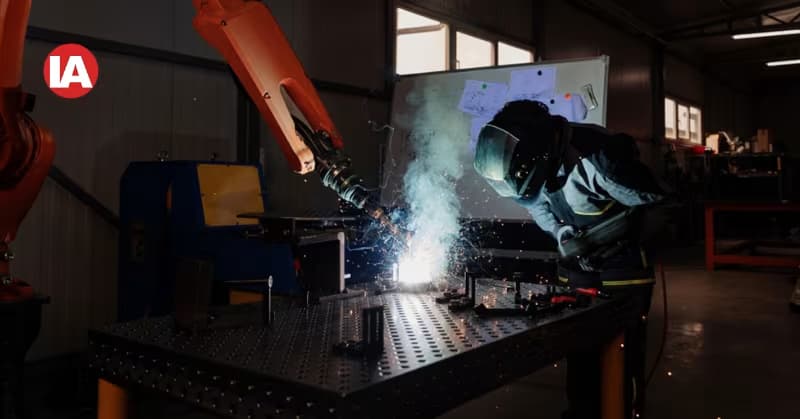
If you are planning a robotic welding project, the first question is always simple:
How much will it cost—and will it actually deliver returns?
In India, robotic welding line costs vary significantly depending on production volume, automation level, fixture complexity, and integration quality. The robot itself is only one part of the investment—the real cost lies in engineering, tooling, and execution.
Before evaluating pricing, it is important to understand how system integration impacts automation performance and long-term ROI.
Real Cost Range of Robotic Welding Systems in India
Most robotic welding projects in India currently fall into three broad categories:
System Type | Estimated Cost Range | Best For |
Entry-Level Welding Cell | ₹25 – ₹45 lakh | Small batches, basic automation, manual loading |
Mid-Level Automated Line | ₹45 lakh – ₹1.5 crore | 1–3 robots, semi-automated fixtures, standard automation logic |
Fully Automated Welding Line | ₹1.5 – ₹5+ crore | High-volume production, AI vision systems, conveyor integration |
Disclaimer: Cost and ROI figures mentioned in this article are based on industry benchmarks and typical market estimates in India. Actual pricing and performance may vary depending on application complexity, production volume, materials, and integration scope.
What Actually Drives the Cost?
Understanding the major cost, drivers helps manufacturers avoid budget surprises during implementation.
The Robot Hardware
Premium brands such as ABB, FANUC, and KUKA usually account for approximately 30–40% of the total project investment.
The final cost depends on:
- Payload and reach
- Welding application type
- Speed and precision requirements
👉 The robot alone does not determine project success.
Fixtures & Tooling (Most Critical Factor)
Fixtures and jigs are the mechanical foundation of a robotic welding line.
They ensure:
- Accurate part positioning
- Repeatable weld quality
- Lower rejection rates
👉 Poor fixture quality often results in defects, scrap, and production instability.

Integration & Engineering Cost
This includes:
- PLC programming
- Robot programming
- Safety integration
- System design and commissioning
Integration and engineering typically account for 20–30% of the total project cost.
👉 In most cases, integration quality has a bigger impact on ROI than the robot brand itself.
To understand how execution quality affects project success, explore our guide on system integrators in India.
AI & Vision Integration
Modern robotic welding systems increasingly use AI-driven technologies such as:
- Vision-based seam tracking
- Adaptive welding
- AI-based defect detection
Adding AI and vision systems may increase project cost by ₹10–₹50 lakh depending on complexity.
However, these systems can significantly improve:
- Weld consistency
- First-pass yield
- Production efficiency
👉 This forms the foundation of intelligent manufacturing and the future of industrial automation.
ROI: When Does the Investment Pay Back?
A well-planned robotic welding system is not just an expense—it is a long-term productivity investment.
Most Indian manufacturers recover their investment within 12–24 months through:
- Higher production throughput
- Lower rejection and rework
- Reduced dependency on skilled labour
- Better production consistency
Typical improvements include:
- 30–50% reduction in weld defects
- 20–40% faster cycle time
To understand long-term financial impact, refer to:
👉 ROI of Robotic Welding Systems: Is It Worth It for Indian Manufacturers?
Hidden Costs Buyers Often Ignore
Many factory owners underestimate these areas during budgeting:
Production Trials & Fixture Changes
Minor fixture modifications are common after initial production testing.
👉 Keeping a 10–15% contingency buffer is recommended.
Operator Training
Teams must be trained to operate automation interfaces, welding programs, and safety systems.
AMC & Long-Term Support
Annual Maintenance Contracts (AMC) and spare parts support are essential for high-volume operations.
👉 Long-term maintenance planning directly impacts system reliability.

Common Cost Mistakes
Avoid these frequent mistakes:
- Choosing the lowest-cost integrator
- Ignoring fixture quality
- Underestimating integration complexity
- Planning only for current production needs
- Focusing only on upfront cost instead of long-term operating cost
👉 Lower initial pricing often results in higher long-term expenses.
How This Fits Your Decision Journey
Before finalizing your budget:
- Understand integration → Robot Integrator for Welding Line in India
- Evaluate cost (this article)
- Calculate returns → ROI of Robotic Welding Systems
- Compare vendors → Top Robot Integrators in India
How to Optimize Your Investment
Manufacturers can improve ROI and reduce operational risk by:
- Standardizing components wherever possible
- Investing in high-quality fixtures
- Selecting experienced system integrators
- Planning for future scalability
- Evaluating AI-enabled systems carefully
👉 Choosing the right automation partner is one of the most important factors affecting long-term success.
Final Perspective
In 2026, the real value in robotic welding automation is not just the robot—it is the quality of integration, engineering, and long-term execution.
A slightly higher investment in an experienced integrator often delivers:
- Lower downtime
- Better weld quality
- Faster ROI
- Improved production stability
The cheapest system is rarely the most cost-effective in the long run.
Planning a robotic welding project?
Compare pricing, evaluate vendors, and explore automation solutions for your manufacturing requirements:
👉 Explore verified robot integrators in the Industrial Automation Directory
Industrial Automation Market Outlook & Strategic Insights
The industrial automation market is entering a phase of accelerated transformation, where resilience, intelligence, and adaptability are becoming core operational priorities. As highlighted in this research report, the shift toward AI-driven automation, digital twins, and connected factory ecosystems is redefining how industries approach manufacturing and process optimization.
Organizations are no longer investing in automation solely for efficiency, but to build scalable, secure, and future-ready industrial systems capable of handling global disruptions and evolving market demands.
Key Technologies Driving Automation Growth
- Artificial Intelligence (AI) and Machine Learning for predictive operations
- Industrial IoT (IIoT) for real-time monitoring and control
- Digital Twins for simulation and optimization
- Robotics and Autonomous Systems for flexible manufacturing
- Cybersecurity frameworks for protecting industrial environments
Real-World Industry Applications
Industries across the globe are leveraging automation technologies to enhance productivity and operational resilience:
- Automotive manufacturing with robotics and assembly automation
- Pharmaceutical production with process automation systems
- Energy and infrastructure with predictive maintenance solutions
- FMCG and logistics with smart supply chain automation
👉 Explore companies implementing these solutions: Industrial Automation Companies Directory
Strategic Importance for Businesses
For decision-makers, industrial automation is no longer optional. It plays a critical role in reducing risks, improving efficiency, enhancing supply chain resilience, and enabling data-driven decision-making across industries.
Explore the Industrial Automation Ecosystem
- Industrial Automation Companies
- Automation Products & Solutions
- Latest Industrial Automation News
- Industrial Automation Magazine
- Women in Industrial Automation
Future of Industrial Automation
The future of industrial automation lies in autonomous systems powered by AI, real-time data, and intelligent control frameworks. Businesses that adopt these technologies early will gain a significant competitive advantage in a rapidly evolving industrial landscape.
Latest Updates
Honeywell modular technology to power and automate Acelen Renewables biofuel production
20/06/2026US robot industry returns to double digit growth
20/06/2026VIAVI PCIe 6.0 platform receives Gold Suite acceptance from PCI-SIG
20/06/2026Signode launches BXT Go battery-powered hand tool for plastic strapping
19/06/2026Top Articles
Redefining Water Efficiency with Intelligent Control and Automation
Edge Computing: A Game Changer for MSMEs
Edge Computing: Redefining Control, Latency, and Intelligence in Industrial Automation
China Continues to Dominate Cobots Market
Hikmicro Handheld Thermal Cameras for Electrical Safety
Digital Magazine


The Minds of Manufacturing
Our interviews offer a direct window into the boardrooms of the world's leading automation providers. We focus on strategic discussions that help our readers understand not just the 'what', but the 'why' behind today's industrial technology developments.
Executive Perspective on Industrial Transformation
Our Interviews section features the most influential voices in the industrial sector. We sit down with CTOs, Engineering Directors, and Industrial Strategists to discuss the practical aspects of implementing Industry 4.0 standards and the impact of AI on manufacturing.
These conversations go beyond technical specifications, exploring the vision and strategy required to lead a factory in the modern age. Complement these insights by exploring our Cover Stories for implementation success, find local vendors in the Supplier Directory, or stay up to date with our Latest News feed. Exclusive market forecasts are also available through our Research Reports.