Top Robot Integrators & Welding Automation Companies in India (2026 Guide)
Explore India’s top robot integrators and welding automation companies for reliable industrial projects.
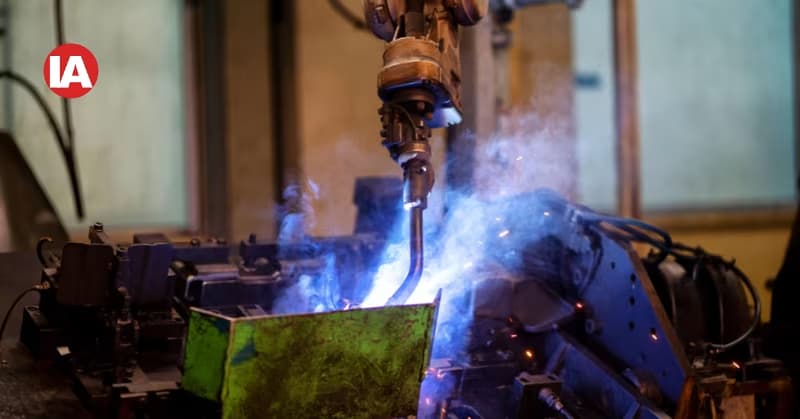
Choosing a robotic welding system is not just about selecting the right robot—it’s about choosing the right integrator.
India has hundreds of automation companies, but only a small percentage can deliver stable, production-ready robotic welding lines with proper fixtures, programming, and long-term support.
This guide helps you:
Identify serious robot integrators in India
Understand the difference between OEMs and integrators
Shortlist the right vendor for your project
If you’re new to this topic, start with the complete guide on robot integrator for welding line in India to understand how integration impacts cost, quality, and ROI.
OEM vs Integrator (Critical Understanding)
Robot OEMs (Technology Providers)
Global companies like ABB Robotics, FANUC, KUKA and Yaskawa manufacture industrial robots.
They provide:
- Robots and controllers
- Software platforms
- Core automation technology
👉 These companies provide the technology foundation.
However, most OEMs do not execute complete turnkey welding automation projects for every factory application.
System Integrators (Execution Experts)
System integrators are responsible for transforming automation technology into a fully working production system.
They handle:
Welding line design
Fixture and tooling development
PLC and robot integration
Safety systems and commissioning
Production optimization and support
👉 In most robotic welding projects, integration quality has a greater impact on performance than the robot brand itself.
To understand the broader role of execution partners in automation projects, you can also explore our guide on system integrators in India.
Types of Robot Integrators in India
Not every automation company specializes in the same type of welding application.
Most integrators fall into these categories:
Automotive-Focused Integrators
These companies specialize in:
- Spot welding lines
- Automotive body assembly
- High-volume production automation
👉 Best suited for automotive OEMs and Tier-1 suppliers.
Fabrication & General Engineering Integrators

These integrators focus on:
MIG/TIG robotic welding
Structural fabrication
Heavy engineering applications
👉 Commonly preferred by SMEs and fabrication industries.
AI & Vision Automation Specialists
A growing category of automation companies now focuses on:
Vision-based seam tracking
Adaptive robotic welding
AI-driven defect detection
👉 These systems improve weld consistency and support intelligent manufacturing environments.
To understand how AI is transforming manufacturing systems, explore the future of industrial automation.
What Top Integrators Actually Deliver
A serious integrator provides complete end-to-end execution:
Application study and feasibility analysis
- Robot and fixture design
- Simulation (offline programming)
- Full system integration
- Installation, commissioning, and training
- After-sales support and maintenance
👉 If a vendor cannot demonstrate live installations, it’s a major red flag.
How to Evaluate Robot Integrators (Buyer Checklist)
Before finalizing a vendor, assess the following:
✅ Installed Base
How many welding lines are operational?
- Can you visit a live project site?
✅ Fixture Design Capability
- In-house mechanical design team
- Ability to handle complex welding fixtures
✅ Industry Experience
- Automotive ≠ fabrication
- Choose domain-specific expertise
✅ Engineering Depth
- PLC + robot + safety integration
- Not just assembly-level work
✅ After-Sales Support
- Local service availability
- AMC contracts
- Spare parts support
👉 Skipping these checks can lead to project delays and performance issues.

Major Integrator Hubs in India
Certain cities have strong automation ecosystems:
- Automotive and manufacturing hub
- Strong welding automation ecosystem
- OEM and Tier-1 supplier base
- High demand for robotic welding systems
- Growing fabrication and engineering sector
- Diverse automation solution providers
- Access to multiple industries
👉 Choosing a vendor near your plant improves service response and support.
AI-Ready Integrators (Emerging Category)
Modern integrators are moving toward AI-enabled welding systems.
Key capabilities include:
- Vision-guided welding
- Seam tracking
- AI-based defect detection
- Predictive maintenance
👉 These capabilities improve accuracy, reduce rejection, and future-proof your system.
Cost vs Integrator Quality (Hard Truth)
There is a direct trade-off between cost and execution quality:
Low-cost integrator → lower upfront cost, higher long-term risk
- Experienced integrator → higher initial investment, faster ROI
👉 Integration quality directly impacts:
Weld consistency
- Cycle time
- Maintenance cost
For a cost breakdown, refer to:
➡ Cost of Robotic Welding Line in India
⚠️ Common Mistakes Buyers Make
Avoid these critical mistakes:
- Selecting based only on price
- Not verifying live installations
- Ignoring fixture and tooling expertise
- Overlooking after-sales support
👉 These mistakes often result in delays, defects, and cost overruns.
How This Fits Your Decision Journey
Before selecting a vendor:
- Understand integration → Robot Integrator for Welding Line in India
- Evaluate cost → Cost of Robotic Welding Line in India
- Calculate ROI → ROI of Robotic Welding Systems
- Explore AI capabilities → AI in Robotic Welding
👉 Then shortlist integrators with confidence.
Conclusion
Choosing the right robot integrator is the most critical decision in your automation journey.
The right partner ensures:
Reliable system performance
- Consistent weld quality
- Faster ROI
The wrong choice leads to:
Project delays
- Production issues
- Increased long-term costs
Looking for trusted robot integrators in India?
Compare capabilities, evaluate vendors, and connect directly:
👉 Explore verified automation companies in the Industrial Automation Directory
Disclaimer: Company listings, technical capabilities, and market positioning referenced in this article are based on general industry information and 2026 market trends. This guide is intended for informational purposes only and does not constitute a formal endorsement of any specific vendor or company.
Industrial Automation Market Outlook & Strategic Insights
The industrial automation market is entering a phase of accelerated transformation, where resilience, intelligence, and adaptability are becoming core operational priorities. As highlighted in this research report, the shift toward AI-driven automation, digital twins, and connected factory ecosystems is redefining how industries approach manufacturing and process optimization.
Organizations are no longer investing in automation solely for efficiency, but to build scalable, secure, and future-ready industrial systems capable of handling global disruptions and evolving market demands.
Key Technologies Driving Automation Growth
- Artificial Intelligence (AI) and Machine Learning for predictive operations
- Industrial IoT (IIoT) for real-time monitoring and control
- Digital Twins for simulation and optimization
- Robotics and Autonomous Systems for flexible manufacturing
- Cybersecurity frameworks for protecting industrial environments
Real-World Industry Applications
Industries across the globe are leveraging automation technologies to enhance productivity and operational resilience:
- Automotive manufacturing with robotics and assembly automation
- Pharmaceutical production with process automation systems
- Energy and infrastructure with predictive maintenance solutions
- FMCG and logistics with smart supply chain automation
👉 Explore companies implementing these solutions: Industrial Automation Companies Directory
Strategic Importance for Businesses
For decision-makers, industrial automation is no longer optional. It plays a critical role in reducing risks, improving efficiency, enhancing supply chain resilience, and enabling data-driven decision-making across industries.
Explore the Industrial Automation Ecosystem
- Industrial Automation Companies
- Automation Products & Solutions
- Latest Industrial Automation News
- Industrial Automation Magazine
- Women in Industrial Automation
Future of Industrial Automation
The future of industrial automation lies in autonomous systems powered by AI, real-time data, and intelligent control frameworks. Businesses that adopt these technologies early will gain a significant competitive advantage in a rapidly evolving industrial landscape.
Latest Updates
Honeywell modular technology to power and automate Acelen Renewables biofuel production
20/06/2026US robot industry returns to double digit growth
20/06/2026VIAVI PCIe 6.0 platform receives Gold Suite acceptance from PCI-SIG
20/06/2026Signode launches BXT Go battery-powered hand tool for plastic strapping
19/06/2026Top Articles
Redefining Water Efficiency with Intelligent Control and Automation
Edge Computing: A Game Changer for MSMEs
Edge Computing: Redefining Control, Latency, and Intelligence in Industrial Automation
China Continues to Dominate Cobots Market
Hikmicro Handheld Thermal Cameras for Electrical Safety
Digital Magazine


The Minds of Manufacturing
Our interviews offer a direct window into the boardrooms of the world's leading automation providers. We focus on strategic discussions that help our readers understand not just the 'what', but the 'why' behind today's industrial technology developments.
Executive Perspective on Industrial Transformation
Our Interviews section features the most influential voices in the industrial sector. We sit down with CTOs, Engineering Directors, and Industrial Strategists to discuss the practical aspects of implementing Industry 4.0 standards and the impact of AI on manufacturing.
These conversations go beyond technical specifications, exploring the vision and strategy required to lead a factory in the modern age. Complement these insights by exploring our Cover Stories for implementation success, find local vendors in the Supplier Directory, or stay up to date with our Latest News feed. Exclusive market forecasts are also available through our Research Reports.