The digital economy is driving a transformation where IT distributors evolve into strategic enablers, says Jagat Shah.
There’s a paradox in today’s digital economy: to compete, small and medium sized businesses (SMBs) face the same digital transformation pressures as large enterprises and so need sophisticated technology but they often lack the resources, expertise, and budget that larger enterprises possess, creating a widening gap. This is where IT distributors step in, from becoming logistics providers to technology enablement partners, making cutting-edge technologies accessible to the businesses that need it most. In India especially, manufacturing and automation sectors rely heavily on SMBs as the backbone of industry.
The switch from tradition
The traditional role of an IT distributor’s functions was once notched out as a straightforward middleman between manufacturers and end-users, handling logistics and product aggregation. But like most things, the digital age has changed this role too. Today, value-added distributors (VADs) are starting to be established as transformation partners, enabling enterprises to execute their innovation. This evolution is the direct result of the realisation that technology alone isn’t enough to leverage enterprise-grade solutions effectively, SMBs need comprehensive support from their distributors.

The unique SMB challenge
SMBs significantly contribute to India’s manufacturing but face constrained IT budgets and multiple barriers to adopting enterprise-grade technology. Cost is the biggest hurdle, including high upfront investments, ongoing maintenance, and employee training, which can seem prohibitive for businesses operating on tight margins. Besides financial challenges, 79% of employers report skill shortages in emerging technologies like AI and cloud computing, hampering effective implementation. Security is another concern, with over half of cyberattacks targeting SMBs, and 60% shutting down within six months after a breach. Together, limited budgets, skill gaps, and security risks create a challenging environment for SMBs striving for technological growth.
How distributors can help
IT distributors today act as technology translators, moving beyond product sales to conduct detailed needs assessments that align technological investments with each SMB’s unique operations, growth plans, and budget. By serving as consultants rather than mere sellers, distributors ensure that solutions meet business objectives. They also offer critical market insights, guiding SMBs through a complex landscape of technological options and innovations without requiring extensive internal expertise.
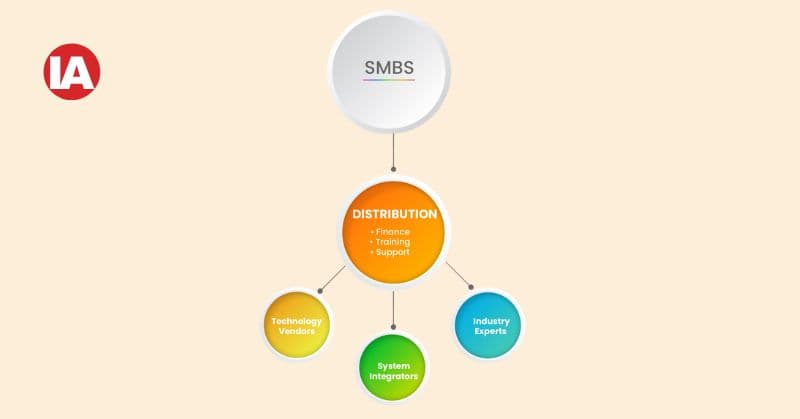
The traditional distribution model focused on product delivery but has evolved to provide value-added services such as local market understanding, tailored technical training, financing options, and after-sales support. For instance, a mid-sized automotive manufacturer adopting automated quality inspection can benefit from distributor-enabled financing, comprehensive training, and ongoing technical assistance, simplifying adoption and accelerating ROI. This modern approach highlights how distributors support SMBs beyond logistics, delivering real value in technology implementation.
Distributor strategies
Distributors enable SMB technology adoption through key strategies: Financial innovation offers extended credit, “Technology-as-a-Service” financing, and phased implementations, addressing capital equipment costs. Knowledge transfer includes technical training, product demos, industry-specific workshops, and certification programs that build local skills. Ecosystem building fosters networks among SMBs, integrators, and vendors, with partner enablement and community knowledge sharing. Localised support ensures regional warehouses for quick delivery, local technical teams for reduced downtime, and RMA/warranty handling beyond SMB capacity. These strategies collectively help SMBs overcome financial, technical, and operational barriers to technology adoption.
Easier management of supply chains
An SMB that is managing relationships with multiple vendors is one that is facing a significant administrative burden. Distributors have the quality of simplifying supply chains by aggregating products from various manufacturers and delivering comprehensive solutions through a single point of contact. This consolidation reduces procurement complexity, streamlines invoice management, and creates efficiency gains that allow SMBs to focus on core business activities rather than vendor coordination.
The operational benefits extend to technical support as well. Rather than navigating different support channels for various products, SMBs can access unified technical assistance through their distributor relationship. This integrated approach helps resolve problems and reduces downtime.
Bridging the skills gap
Proper enablement is required for the effective adoption of technology. Distributors invest heavily into initiatives that range from basic user training to advanced technical certifications, ensuring that organisations can leverage their systems effectively, empowering SMB teams to maximise their technology investments. This helps bridge the skills gap through training that provides structured learning programs.
Becoming cybersecure
Most SMBs lack either the expertise to have in place strong cybersecurity protection measures. In this scenario, enterprise-grade security tools save the day, now within reach through distributor partnerships for those who aren’t large corporations. Distributors have the added advantage of providing consolidated cybersecurity platforms that protect email, endpoints, cloud applications, and data through unified management interfaces. This eliminates security gaps caused by misconfigured, fragmented solutions while reducing operational overhead. Distributors also ensure that security measures align with regulatory compliance requirements, protecting SMBs from both cyber threats and legal liabilities.
What the future looks like
Distributor enablement accelerates smart manufacturing adoption among SMBs by reducing implementation time, lowering total cost of ownership, and delivering faster ROI. This support makes Industrial IoT (IIoT) technologies like predictive maintenance sensors financially accessible, while distributor partnerships provide SMBs access to cloud-based MES and ERP systems. Cybersecurity solutions bundled with hardware offer holistic protection that SMBs struggle to implement independently. Timeline comparisons reveal the dramatic difference: traditional procurement processes take 6-12 months, while distributor-enabled approaches compress implementation to just 2-4 months, significantly shortening the path to operational benefits.
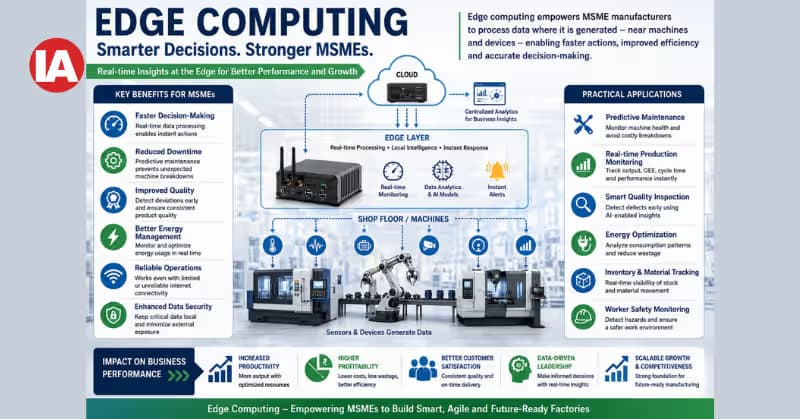
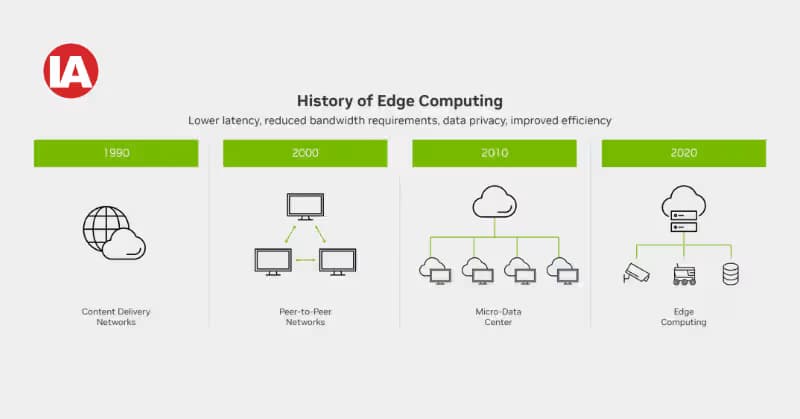
The future of distribution in SMB empowerment centres on emerging technologies and strategic support. AI-driven demand forecasting helps SMBs optimise inventory management, while the distribution of sustainability and green technology solutions gains importance as environmental priorities rise. Edge computing and 5G integration are reshaping manufacturing capabilities, and digital marketplaces are democratising technology access for smaller players. Critically, distributors continue bridging the skilled workforce gap through comprehensive enablement programs, ensuring SMBs have both the technology and human capital needed to compete in an increasingly automated industrial landscape.
Conclusion
The digital economy is driving a transformation where IT distributors evolve into strategic enablers, changing how SMBs access and use technology. Distributors now act as advisors, solution architects, and ongoing support providers, empowering SMBs to adopt enterprise-quality, tailored solutions. For millions of SMBs globally, partnering with next-generation IT distributors is vital for digital transformation and future-proofing their businesses in a competitive, tech-driven market. Distributors should be seen not just as intermediaries but as foundational infrastructure for SMBs, enabling ecosystem collaboration among vendors, distributors, and integrators. This collaborative model supports the vision of SMBs equipped with enterprise-grade capabilities, which is essential for making India’s manufacturing sector globally competitive and advancing India’s broader manufacturing ambitions by empowering its majority SMB base.
Mr Jagat Shah serves as the Chairman & CEO of the esteemed MITSUMI Group, an influential conglomerate renowned for its diverse portfolio of businesses. His stewardship extends across a global landscape, with the Mitsumi Group operating in 32+ countries and boasting an annual turnover exceeding $1.1 billion. This multinational conglomerate, under Mr Shah's guidance, has cultivated a workforce exceeding 500+ skilled professionals.
At the heart of the Mitsumi Group's operations is its flagship entity, MITSUMI Distribution, the Middle East and Africa's foremost IT, Telco, and Enterprise Distribution Company. Beyond this technological prowess, Mitsumi Group has ventured into a plethora of sectors, including IT, Hospitality, Real Estate, Textiles, Trading, and Construction.
Mr Jagat Shah brings to the table over 27+ years of invaluable experience in the technology sector. He was born in Uganda and his journey began as a Computer Engineer in India in 1993. Subsequently, he migrated to Kenya, where he took on various high-ranking managerial roles from 1994 to 1996.
In 1998, demonstrating remarkable entrepreneurial spirit, Mr Shah, in partnership with his younger brother, Mr. Mitesh Shah, founded a modest computer repair and services company named Mitsumi Computer Garage Ltd. Their dedication, acumen, and a touch of good fortune propelled the company to remarkable heights. By the turn of the millennium, Mitsumi Computer had emerged as the preeminent IT distribution and service provider in the Kenyan market.
Author