Lights-out manufacturing is technically feasible today, but not yet universally practical across all mass production sectors, says Benedicta Chettiar.
For decades, the vision of lights-out manufacturing—factories that operate with total autonomous operation without human presence—has fascinated industrial leaders. In theory, such plants can run 24/7, require no lighting or HVAC for human comfort, and deliver ultra-consistent, error-free production. But how close are we to achieving this model at scale, especially for complex mass production environments? The answer lies in the strategic balance between technological readiness and practical limitations.
The Pillars of Autonomous Operation in Modern Factories
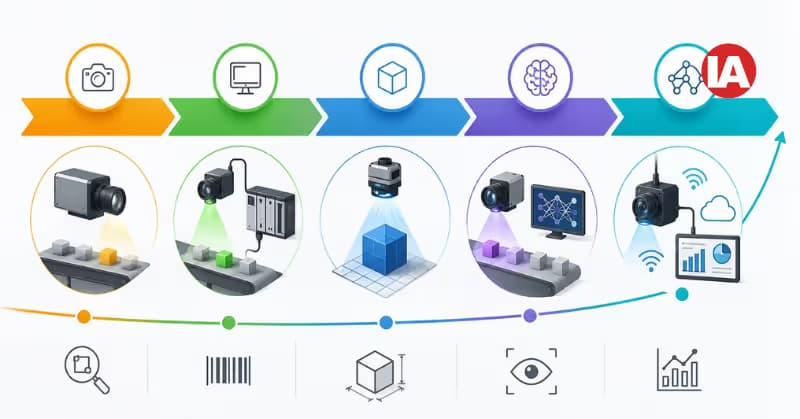
At its core, lights-out manufacturing depends on a seamless integration of robotics, automation, industrial IoT, AI-driven quality systems, and fully digital workflows. In highly structured, repetitive manufacturing contexts—such as semiconductor fabrication, CNC machining, or electronics assembly—automation has already achieved remarkable maturity.
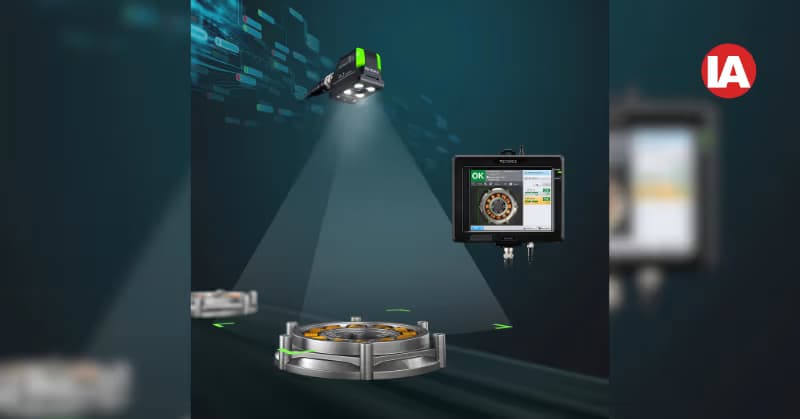
Several global companies now operate near lights-out lines, using robotic arms, automated material handling systems, and AI-based inspection to achieve uninterrupted output. For these scenarios, the feasibility is high, and the economics are compelling: reduced labor dependency, minimized errors, and significantly improved Overall Equipment Effectiveness (OEE).
Challenges in Scaling Automation for Mass Production
However, mass production is not monolithic. It spans automotive, consumer goods, pharmaceuticals, and food processing—each with distinct complexities. While automotive plants may automate welding, painting, or stamping with ease, other operations involving flexible assembly or variable material properties pose challenges.
Industrial automation thrives in environments with low variability and high repeatability. Mass production, especially in consumer-driven industries, often involves short product cycles and customization needs—areas where full autonomy still struggles to match human adaptability.
Robotics and the "Dexterity Gap"
Robotics has progressed significantly, but dexterity, fine motor manipulation, and adaptability remain limitations. Many mass-produced goods still require human hands for assembly or packaging steps that are difficult to standardize. Even with advances in collaborative robots (cobots), end-effectors, and AI-driven motion planning, achieving 100% autonomy for mixed-model lines remains an aspirational goal for many industrial leaders.
System Resilience and Predictive Maintenance
Another major challenge is system resilience. Human workers excel at situational awareness—identifying anomalies or making judgment calls during unexpected events. In a lights-out setup, minor malfunctions can halt operations. While predictive maintenance powered by Industrial IoT (IIoT) sensors and machine learning is improving reliability, achieving self-healing, fully autonomous factories is still in the early stages.
Bridging the Data Integration Barrier
Lights-out manufacturing demands a tightly connected digital ecosystem where MES, ERP, and SCADA systems function in synchrony. Many factories operate with partial digitalization and legacy machines. Without full digital maturity and seamless integration of IT/OT architectures, true autonomous operation is infeasible.
The Shift to "Dim-Light" Manufacturing
Economics also play a critical role. Automating every stage requires massive capital investment, and the ROI may not justify the cost for industries with thin margins. Consequently, the trajectory is moving toward "dim-light manufacturing."
In this model, AI-driven quality systems and robotics handle the heavy lifting, while humans shift from manual roles to system orchestration and strategic oversight. This hybrid approach optimizes both error-free production and operational flexibility.
In summary, while lights-out manufacturing is technically feasible for semiconductor fabrication and CNC machining, it is not yet a universal "plug-and-play" solution. As technology matures, factories will increasingly automate—but humans will remain essential partners in the industrial ecosystem.
FAQ
1. What is lights-out manufacturing?
Lights-out manufacturing refers to a production methodology where factories operate fully autonomously without the need for human presence on-site, allowing the facility to run without light, heat, or cooling.
2. Which industries use lights-out manufacturing today?
It is most common in semiconductor fabrication, CNC machining, and electronics assembly, where processes are highly repetitive and require extreme precision.
3. What are the main benefits of autonomous operation in factories?
The primary advantages include error-free production, 24/7 operational uptime, reduced labor costs, and improved OEE (Overall Equipment Effectiveness).
4. Can robotics completely replace humans in mass production?
Not currently. While robotics excel at repeatability, humans are still superior in tasks requiring fine motor skills, complex problem-solving, and adapting to frequent design changes.
5. How does Industrial IoT (IIoT) support lights-out plants?
IIoT provides the "nervous system" for the factory, using sensors to monitor equipment health in real-time, enabling predictive maintenance to prevent system failures before they occur.
6. What is the difference between automation and lights-out manufacturing?
Automation involves using technology to perform specific tasks, while lights-out manufacturing is the endgame of automation where the entire end-to-end process requires zero human intervention.
Visit for more insights: https://www.industrialautomationindia.in/
Benedicta Chettiar is Editor & Publisher of Industrial Automation; and Manager, Strategic Developments, at IED Communications. Besides these roles, Beni, as she is known, is also actively managing the affairs of Jyothi Process, a state-of-the-art printing press.
Author